
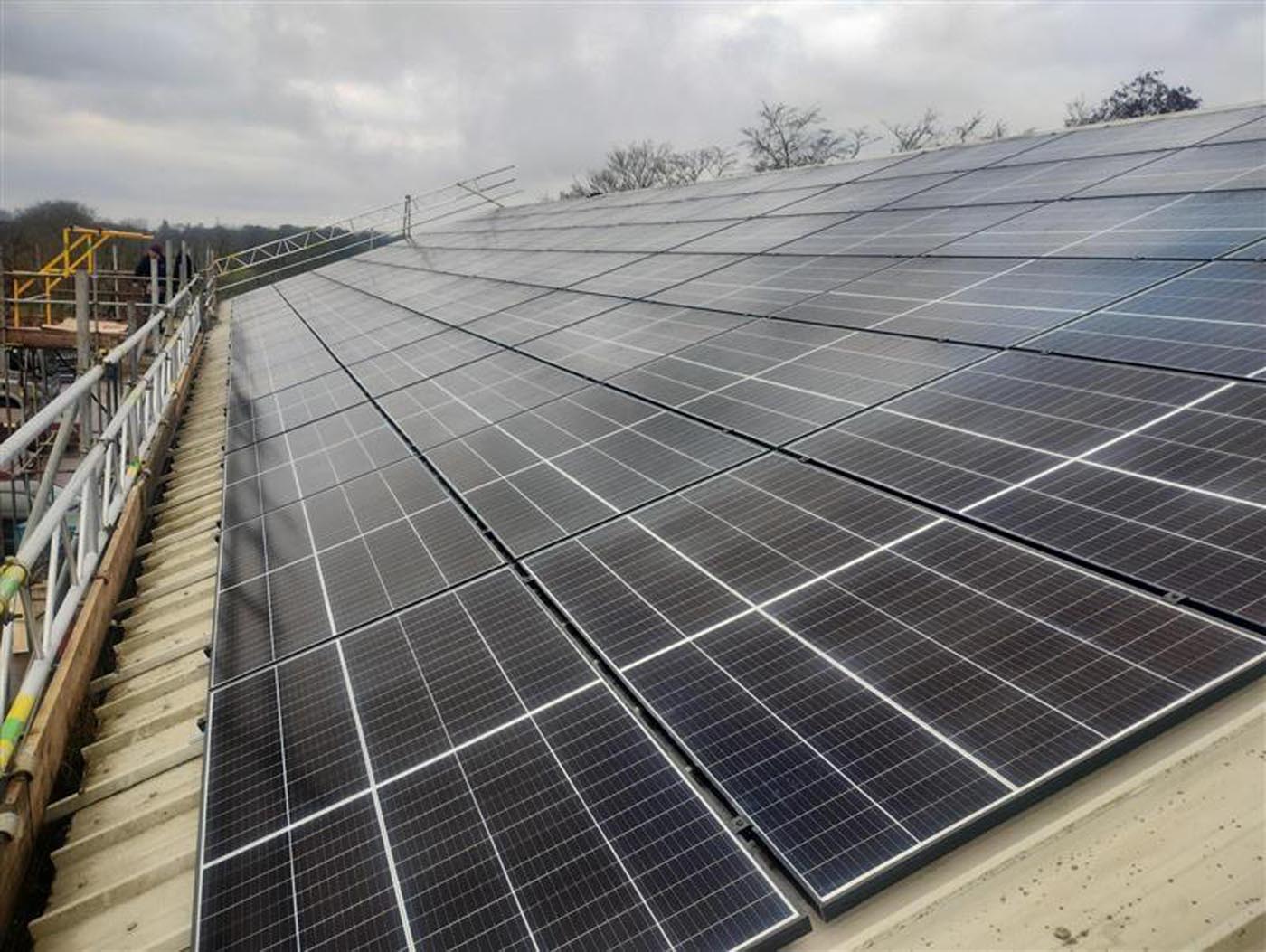
We know for a fact that one of the most common questions for businesses contemplating a solar PV installation (especially in the UK!) relates to cloud coverage. Does your installation still produce electricity on cloudy days? It’s a valid question given the relatively dull Summer that we’re currently battling through.
The answer is yes, solar panels do still produce electricity when it’s overcast, but their efficiency will be somewhat reduced compared to brighter sunny conditions. Solar panels rely on sunlight to generate electricity through the photovoltaic effect, where photons from the sunlight excite electrons in the solar cells, producing an electric current.
During overcast or cloudy days, the amount of sunlight reaching the solar panels is understandably reduced. The clouds scatter and absorb some of the sunlight, leading to a decrease in the intensity of the light that reaches the panels. As a result, the electricity production of the solar panels will be lower than on clear, sunny days – but in no way does that make them completely redundant.
Modern solar panels are designed to be efficient in converting even diffused or indirect light into electricity. They can still generate a significant amount of power through periods of cloudy weather… they may not work to full capacity, but there are still distinct and measurable savings to be had during daylight hours.
All in all, it’s inevitable that grey days will occur in the UK, but don’t worry too much, your installation will still be generating a measurable degree of free electricity for you.
To find out more about solar panel productivity of to discuss the technology that we use on our installations please call us: 01228 830 850 or drop us an email: info@golowcarbon.co.uk
